7 Hills Construction
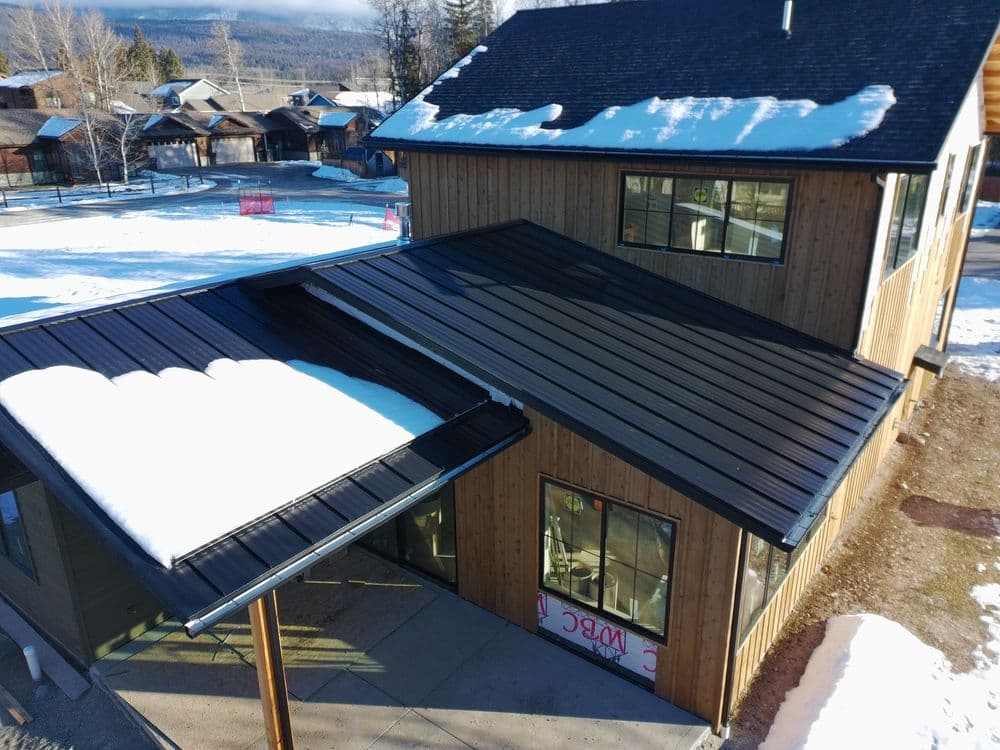
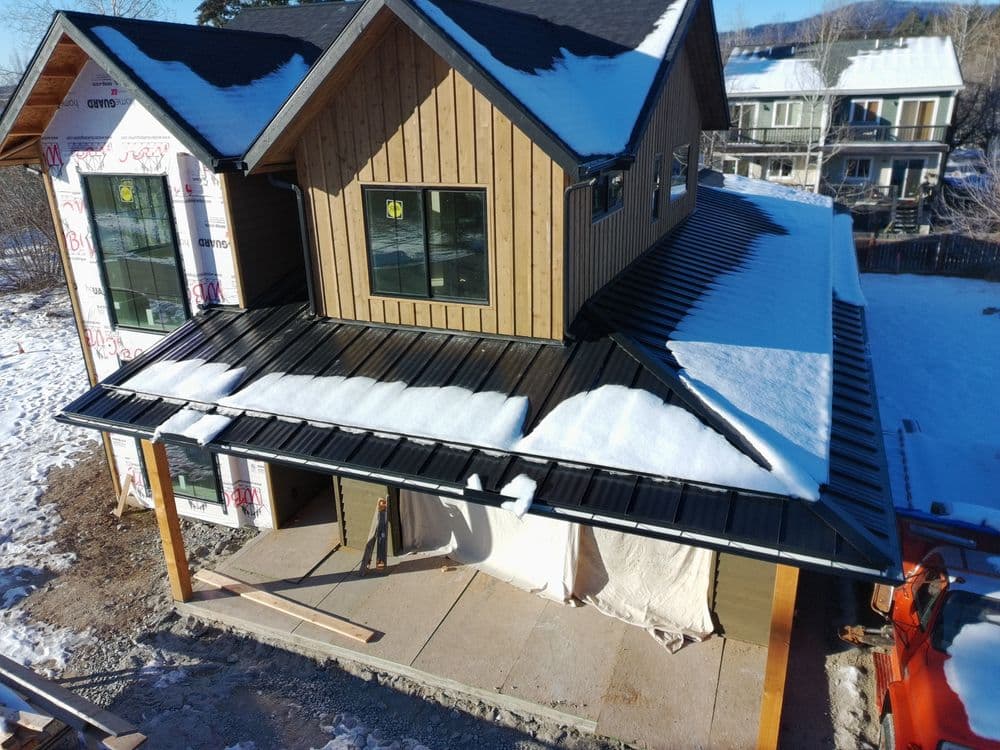
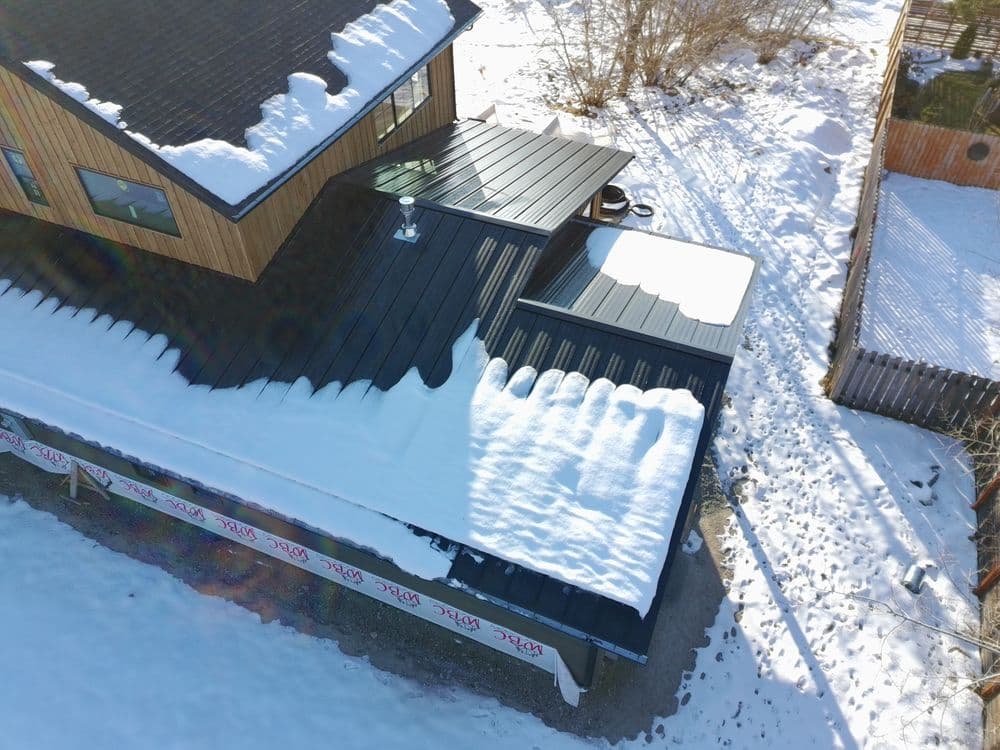
Low-slope roofing is one of the trickier challenges in a place like Whitefish. The pitch isn't steep enough to shed snow quickly, which means water and ice have more time to find a weakness. Getting the material selection and installation right from the start is the only way to avoid problems down the road.
For this new build, we ran 24-gauge standing seam across the low-slope sections. That gauge matters - it's thicker and more rigid than the 26-gauge panels you'll see on a lot of residential jobs, which means better resistance to denting, wind uplift, and the kind of heavy snow loads the Flathead Valley throws at roofs every winter. The concealed fastener design of standing seam also eliminates the exposed screws that can back out or leak over time.
The snow brakes are finished in black to match the panels. That's not just a cosmetic call - a mismatched or bulky snow retention system can look like an afterthought. Blending them into the roof keeps the whole assembly looking intentional while doing its job. And that job is serious: controlling how and when snow releases off the roof so it doesn't drop in sheets onto walkways, entries, or people below.
We see a lot of homes in this area where snow retention gets treated as optional. It's not - especially on lower-pitched metal roofs where snow can build up and release fast. Pairing the right gauge material with a properly spaced retention system is the combination that actually holds up season after season.