How to Prepare for a Metal Roof Quote
Planning a metal roof? Here’s exactly what plans, specs, and decisions your roofer needs so your quote is accurate, detailed, and free of surprises.
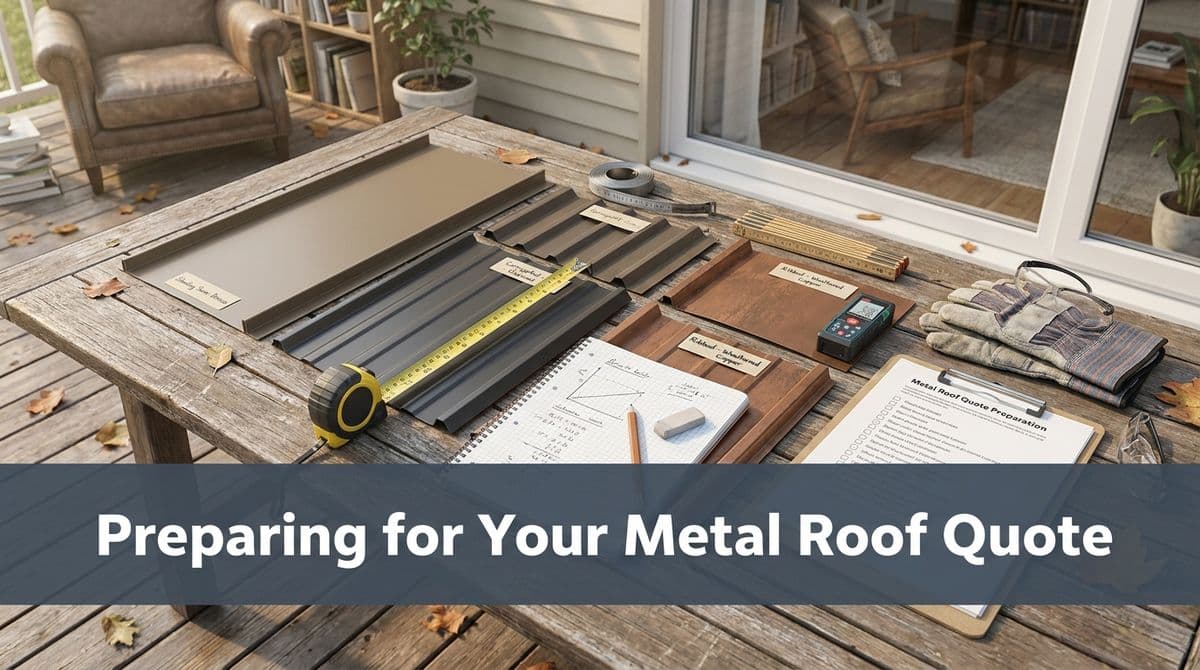
Getting Ready for a Metal Roof Quote
We recently got a call from a homeowner — let’s call him Jason — who’s planning a major remodel on his place. He told us he wants to replace his existing roof with a metal roof, specifically the same profile we installed on a local historic home he really liked.
Jason already had a designer (also him, in this case!) working on construction plans, and he asked a question we hear all the time:
“What do you actually need from me to put together an accurate metal roof quote? Is there a list of questions I can answer ahead of time?”
That call is exactly what inspired this post. If you’re thinking about a metal roof in the next few months — or even next year — here’s how to prepare so your quote is accurate, comparable, and doesn’t leave out any surprise costs.
The One Document That Helps the Most: Your Roof Plan
With Jason, the first thing we asked for was a set of construction documents, specifically a roof plan.
You don’t need a full roll of engineer-stamped drawings to get started, but a basic roof plan makes a huge difference. Here’s what helps us price your project accurately:
- Roof shape and layout – Gables, hips, sheds, dormers, and any odd angles.
- Dimensions – Overall footprint and approximate roof area.
- Pitch (slope) – A 4/12 roof prices and installs differently than a 12/12.
- Overhangs/eaves – How far the roof extends past the walls.
- Valleys and intersections – These add more flashing and labor.
For Jason, he told us, “It’ll probably just be a roof plan,” and that’s perfectly fine. If you have architect or designer plans, great — send those. If not, even a reasonably accurate sketch with measurements and pitch notes can be a useful starting point.
How Plans Affect Pricing
A simple, rectangular roof with a straightforward pitch will typically be less expensive than a cut-up roof with multiple valleys, dormers, and transitions — even if the total square footage is the same. That’s because:
- More details = more trim and flashing (which cost money).
- Complex roofs take longer to install, especially with standing seam.
- Waste factors go up with more cutting and fitting.
When we see your roof plan, we’re not just counting square feet of metal. We’re looking at the whole system: panels, trim, flashings, underlayments, and labor hours to do it right.
Decisions You Should Make Before You Request a Quote
On that call, Jason asked if there was a checklist of decisions he could make beforehand. We walked him through the big three we always need for a metal roofing quote:
- Panel profile
- Metal gauge
- Color and finish
1. Panel Profile: What Style of Metal Roof?
Jason already knew he wanted the same look as a historic home we did: a 1" mechanical lock standing seam. That narrowed things down right away.
Common options we quote include:
- Mechanical lock standing seam – Great for lower slopes and high-snow areas; very weather-tight, more labor-intensive.
- Snap-lock standing seam – Cleaner install on steeper slopes; still a premium, modern look.
- Exposed fastener metal panels – Budget-friendlier, more common on barns and shops, sometimes on homes.
If you’re not sure which profile is right for you, photos of roofs you like (and don’t like) help us steer you in the right direction.
2. Gauge: 26 vs. 24 and Why It Matters
During Jason’s call, we told him the main choice he’d need to make here was 26 vs. 24 gauge. In simple terms:
- 24 gauge – Thicker, stronger, better for durability, hail resistance, and a flatter appearance on standing seam.
- 26 gauge – Slightly thinner, more economical, still a solid option for many homes.
Common homeowner mistakes when choosing gauge include:
- Only looking at the price without considering snow, wind, or hail in their area.
- Mixing up gauge numbers – Remember, in metal, a smaller number means thicker steel.
- Not thinking about long-term value – A thicker panel can mean fewer issues down the road.
If you tell us you’re in a heavy snow or high-wind area, or you’re really picky about a smooth, flat look on larger panels, we’ll often recommend 24 gauge and explain the cost difference up front.
3. Color and Finish: Not Just a Cosmetic Choice
Jason assumed color was purely aesthetic, but he was right to ask if it changes the price. It does — sometimes.
Here’s what we usually ask you to think about:
- Color family – Dark, medium, or light tones.
- Finish type – Standard vs. premium, matte vs. gloss.
- Energy performance – “Cool roof” finishes can help reflect heat.
Some colors are considered premium and cost more per square foot. Others are standard and more budget-friendly. When you request a quote, it helps to have a few favorite colors in mind so we can price accordingly or give you a “standard vs. premium” comparison.
Roof Penetrations, Skylights, and Gutters
One smart question Jason asked was about roof penetrations and skylights. In his remodel, they were planning to add skylights, which affects both materials and labor.
When you’re prepping for a metal roof quote, think about:
- Existing penetrations – Vents, chimneys, flues, plumbing stacks.
- Changes in the remodel – Are you adding or eliminating any?
- Skylights and solar – New openings or equipment that need flashing.
We asked Jason, “With a remodel, are you going to be eliminating any of those or adding any?” His answer — adding skylights — meant we’d be factoring in additional flashing and labor. Ideally, those penetrations and skylights are shown right on your roof plan so we can see their size and location.
Don’t Forget About Gutters
Jason also asked if we handle rain gutters. We do, and many metal roof contractors will either install them or coordinate with a gutter specialist.
If you want gutters included in your quote, it helps to know:
- Whether you want to add, replace, or remove existing gutters.
- Your preferred style (e.g., K-style, half-round) and approximate color preference.
- Any problem areas now, like overflow or ice dams, we should address.
For Jason, we told him to send a few photos and notes with his plans and we’d include gutters in the pricing so he could see the total project cost.
Timing, Lead Times, and When to Request Your Quote
In Jason’s case, the project start was likely late fall, but roofing might not happen until spring. That’s a pretty common situation. He wanted to “get all his ducks in a row” on pricing and lead times ahead of time — which is exactly what you should be doing.
Here’s how timing interacts with your quote:
- Material lead times – Some colors and profiles are stocked; others are special order.
- Seasonal labor availability – Spring and summer can book up fast.
- Quote validity – Many quotes are only good for a set number of days due to material price changes.
If your roof is several months out, we can still quote, but we’ll be clear about how long that price is good for. Often, we’ll do a preliminary quote from plans and then confirm or adjust as we get closer to installation and see the actual site conditions.
What to Send Your Roofer for a Solid Metal Roof Quote
To recap what we asked Jason for — and what will help any roofer give you an accurate metal roof quote — here’s a quick checklist:
- Roof plan or drawings (even basic ones) showing layout, pitch, and penetrations.
- Your preferred panel profile (or example photos of roofs you like).
- Your chosen gauge (typically 26 or 24) or at least a budget range.
- Your color or short list of colors you’re considering.
- Notes on any changes in penetrations, skylights, or solar.
- Whether you want gutters included in the quote.
- Your approximate timeline for the project.
If you send us what you have — even if it’s not perfect — we can usually “ignore what doesn’t matter,” as Jason put it, and focus on the details that do change pricing. From there, we’ll walk you through options so you’re not just getting a number, you’re getting a plan that actually fits your home, budget, and schedule.
Thinking about a metal roof and want to be ready for that first conversation? Use this as your prep guide, and you’ll be way ahead of the game before we even pick up the phone.